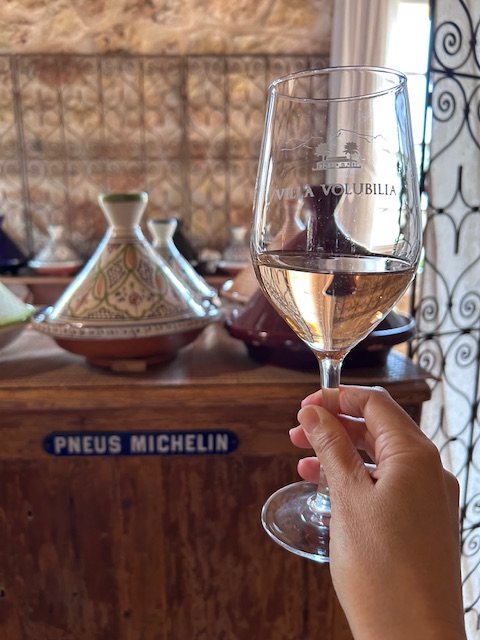
When people think of Morocco, it’s usually all Saharan sand dunes, cinnamon and cumin in tagines, or zellij tiles in stunning palaces and riads. Wine? Not so much. But last month I found myself sitting next to the olive trees at Villa Volubilia sipping a rosé-like Gris made from grapes I’d never heard of, and thinking this country might start getting on more grapefriend itineraries.
Morocco has a small but surprisingly sophisticated wine industry with only about 14 wineries, most located around the city of Meknes (about an hour from Fes). Wine is an interesting thing in Morocco: Islam prohibits alcohol, yet wine production is legal and has existed here for centuries. Historically, wineries largely produced wine for tourists, expats, and export markets, though locals told us that more Moroccans are drinking wine than they used to.
no grapes? no problem.
Morocco doesn’t have native wine grapes so they’ve planted varieties from France, Spain, and Italy. At Villa Volubilia, they grow around 13 to 14 grape varieties, including well-known ones like Cabernet Sauvignon, Syrah, Mourvèdre and then some rarer ones like Marselan and Caladoc. I’d actually never even heard of Caladoc (a crossing of Grenache and Malbec grown in the Languedoc region in France) but it ended up in one of my favorite wines of the visit: a pale Gris made from 55% Mourvèdre, 20% Caladoc, 20% Marselan, and 5% Cabernet Sauvignon. Fresh, a bit savory, and perfect with all the flavors at lunch.
The winery also produces plenty of blends, which makes sense. In a climate as challenging as Morocco’s, blending allows winemakers flexibility while showcasing what grows best in a given vintage.
desert winemakers get a special star
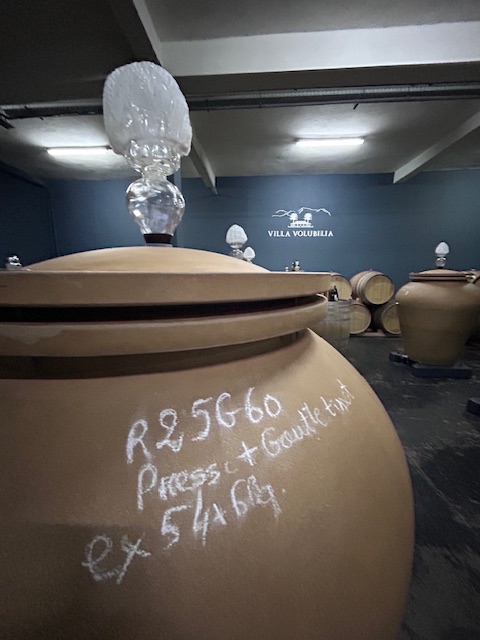
Morocco’s wine regions face a challenge familiar to much of the wine world right now: water. The winery once produced around one million bottles annually. Today, production has fallen closer to 650,000 bottles because of drought conditions.
Villa Volubilia sits at roughly 820 meters (2,700 feet) above sea level on limestone and clay soils with a Mediterranean climate. Those conditions can produce excellent wine, but drought has become an increasing concern. To adapt, they’re planting vines deeper so roots can reach underground water reserves. They’re also moving vineyards higher into the mountains where temperatures are cooler and conditions are slightly less extreme. And concrete vessels also help with keeping the temperature cool.
It’s amazing to see how winemakers all over the world are making wine under such different conditions and cultural norms.
bring on the tagines
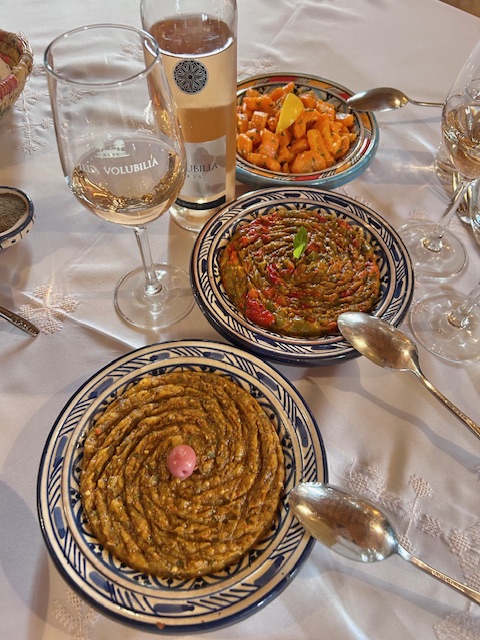
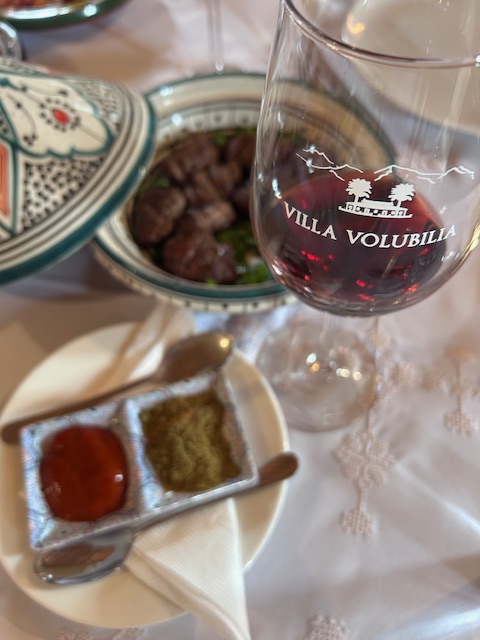
But enough stats. We sat down to lunch and tasted through six wines alongside Moroccan salads that could’ve been the whole meal, super-tender preserved lemon and olive chicken tagine, and local goat cheeses that were made down the road. Even the cookies came out in a cute mini tagine.
By the end of lunch, I’d stopped thinking about Morocco as an “unlikely” wine country. Wines make sense here, with the gris complementing the many spices and the reds supporting the tagine meats. With food this amazing, you definitely need some good wine to go with it all.
escapefriend tips
get there: Get a driver from Fes, which is about an hour away
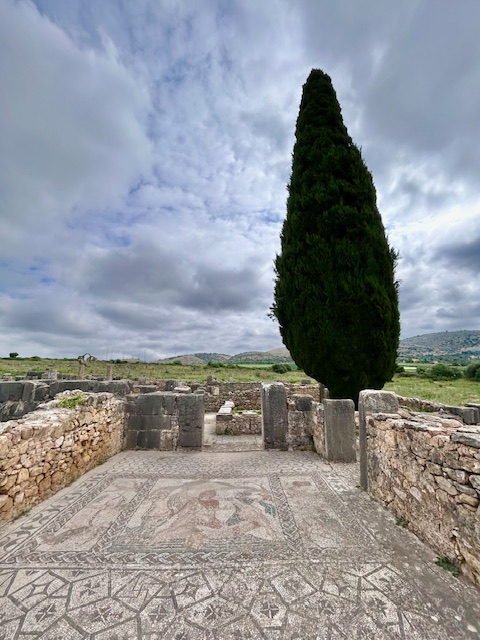
see: Also in the area are the ancient Roman ruins of Volubilis, whose arches and mosaic floors are pretty well preserved. The local guides on site aren’t the most knowledgeable, so study up a bit before you get there.
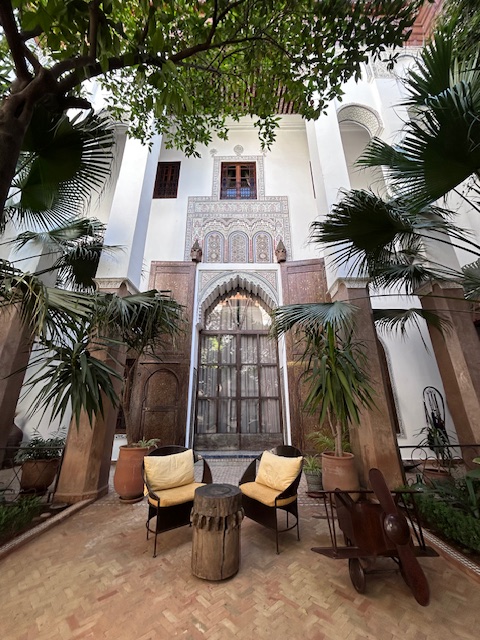
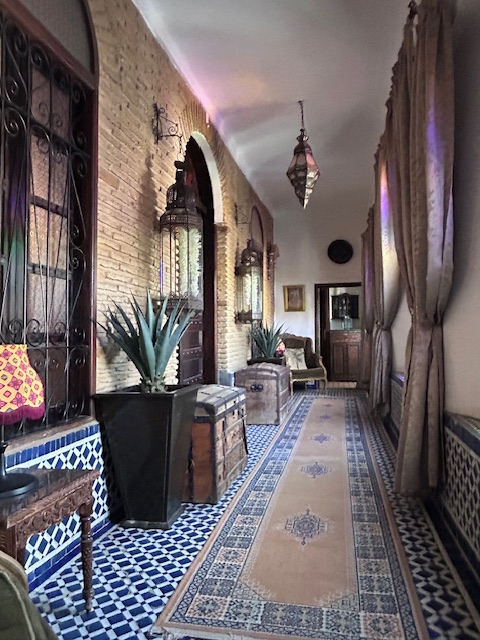
sleep: In Fes, Riad Laaroussa has a great hammam and a gorgeous courtyard with turtles crawling around. The owners at Riad Le Calife make you feel like part of the family and you can get a fantastic view of the medina while eating your cinnamon-sprinkled orange slices at breakfast.

Great article,Sent from my iPadOn Jun 15, 2026,