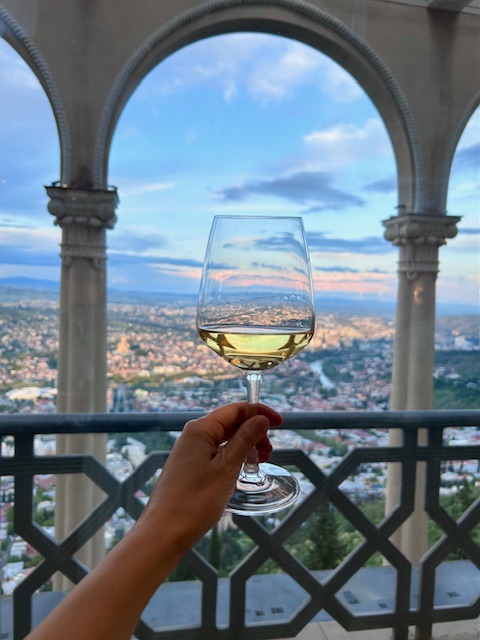
All you might know about Georgian wine is that they make skin-contact orange wine (which Georgians call amber wine). But there’s way more than that.
Quick caveat before we begin: we’re talking Georgia the country, not Georgia the state. The one between Europe and Asia beneath the Caucasus Mountains. No, you don’t know anyone who’s ever been there (except me now).
I recently spent time traveling through Georgia’s wine regions, visiting wineries, and drinking from clay vessels older than many countries. Here are five reasons you should get on board.
#1 georgians are the OG grapefriends
Lots of places claim ancient wine history. Georgia has receipts.
Archaeological evidence suggests wine production here dates back roughly 8,000 years, long before French châteaux or Tuscan villas. Georgians have been fermenting grapes in massive clay vessels called qvevri (pronounced “KWEV-ree”) buried underground forever. Historically, the qvevri were underground to help maintain cool, stable temperatures and protect the wine through centuries of invasion, and they’re still using them today.
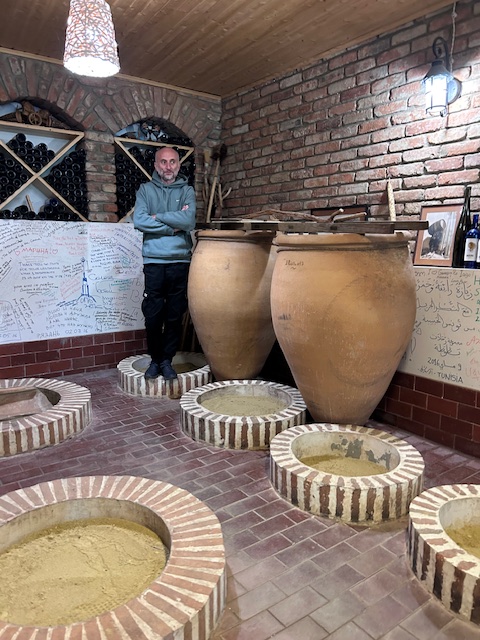
The qvevri method is a key part of Georgian wine culture, producing everything from fresh whites to amber wines fermented on their skins for months. The vessel’s pointed bottom creates natural circulation during aging. As particles settle, they’re redirected upward through the center of the wine, creating movement that can add texture and complexity to the wine.
#2 you could drink a different georgian grape every day for more than a year
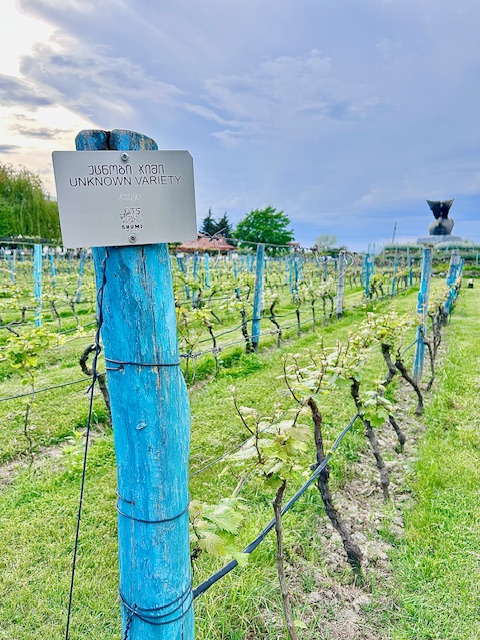
Maybe you have about 10 go-to grapes. Georgia has more than 450 indigenous varieties.
During Soviet rule there (1921-1991), quantity mattered more than diversity. Vineyards were replanted with high-yielding varieties like Rkatsiteli and Saperavi, and many local grapes disappeared. Rkatsiteli is a crisp white with notes of lemon, yellow apple, apricot, honey, and fresh flowers, with naturally high acidity. Saperavi is (one of the only grapes with red flesh) produces deeply inky wines packed with blackberry, black cherry, plum, spice, and cocoa.
But what excites many Georgian winemakers now isn’t just these flagship grapes—it’s the rediscovery of everything else. One day you might try Kisi, a crisp white grape with notes of yellow flowers, honey, ripe apple, and fresh lemon. The next could be Guruli Mtsvane, which shows white blossoms, citrus peel, and a slightly rounder texture. For reds, Tavkveri will give you bright red fruit and spice. Ojaleshi delivers delicate berry fruit. And Shavkapito brings plum and a gunpowder complexity that made them some of my favorite wines of the trip.
The wild part is that even the most seasoned grapefriends have never tasted them! Many wineries I visited seemed to be reviving yet another forgotten variety, with only a few hectares planted. At wineries like Shumi, entire programs are devoted to recovering and preserving Georgia’s genetic wine heritage. Their team spent years tracking down old vines around the country and now they have over 400, making it one of the country’s largest private collections of indigenous grapes. We got to try some of these like Ubakluri among their raucously loud roosters and peacocks.
#3 their dinner parties are better than yours
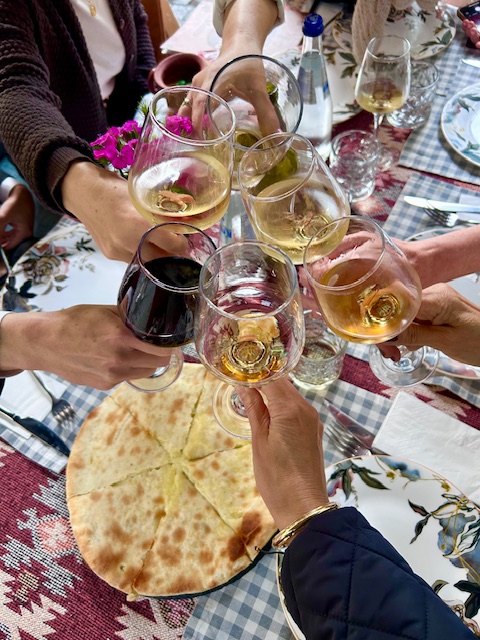
The country’s famous feast is called a supra, with a table so full of food that they start stacking the plates on top of each other. Platters of cheesy khachapuri, pkhali vegetable balls, walnut-stuffed peppers, delicious shkmeruli garlic chicken, chakapuli veal stew. And wine obviously flows non-stop.
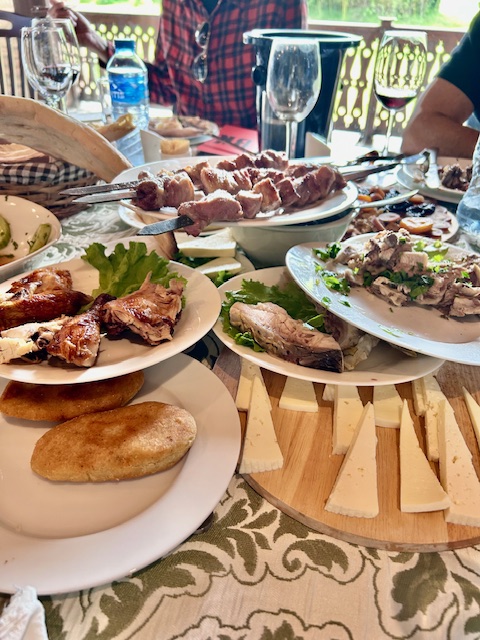
Then add a tamada—the toastmaster who guides everyone through a seemingly endless series of philosophical and/or hilarious toasts in between singing suddenly erupting from tables. But this is no drunken “Sweet Caroline.” It’s mesmerizing multi-part harmony polyphonic singing, which is on UNESCO’s List of the Intangible Cultural Heritage of Humanity (didn’t know that list even existed, now we do).
The feasts are a great example of how Georgian wine culture is all about connection, which is what wine is supposed to be for. As one Georgian said when I was there, “If we don’t bring joy to one another, what else will remain?”
#4 it gives you an excuse to take one of the most underrated trips
Even my more well-traveled friends said Georgia has never been on their radar, despite the fact that it sits at a fascinating crossroads in the Caucasus region between Europe and Asia. Culturally, it feels like a blend of influences from both of those places while remaining completely its own thing.
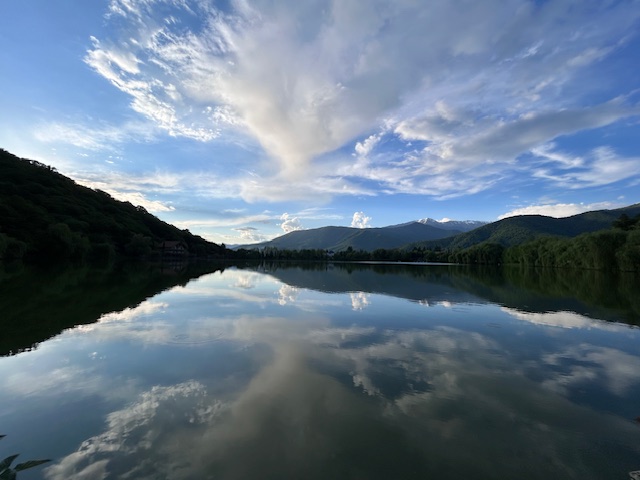
Then there are the Caucasus Mountains themselves. Stretching about 1,200 kilometers between the Black and Caspian Seas, they form one of the most dramatic mountain ranges on earth. Several peaks rise higher than the Alps (What?? Yes, really). Truly stunning. It’s just one of those places that the camera can’t really capture.
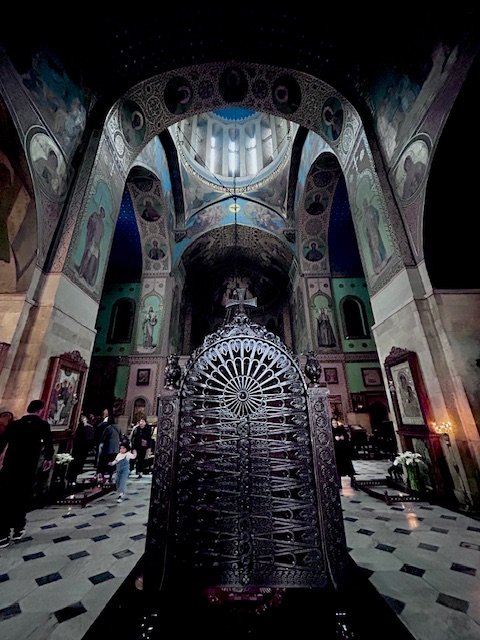
In Tbilisi, you’ll find totally unique dark Orthodox churches where you see old women collecting snuffed-out tapered candles, Soviet-era relics in front of Art Nouveau architecture, a super-modern glass Bridge of Peace next to the small hillside Old Town houses. You can hit the healing sulfur baths (yes, they smell but you get used to it), and then eat way too much bread and cheese.
We stayed at Rooms (an old Soviet printing press turned into a fantastic boutique hotel), grabbed amazing coffee and cinnamon buns at Stamba Bakery, ate at casual tables on the street and also at the gorgeous Keto and Kote.

And there is wine everywhere. They know how important wine has been to their country and they flaunt it.
#5 georgian wine is the ultimate comeback story
Iago Bitarishvili of Iago’s Wine said that during Soviet rule his family couldn’t make wine commercially. His father became a bus driver. His mother was a kindergarten teacher. Today, Iago exports his wines around the world while his wife Marina—Georgia’s first female professional winemaker—helps lead an association of women winemakers which now has more than a dozen members.
Georgia’s producers are now asking new questions: What does Chinuri taste like in Kartli? How should Kisi be grown? What does aging in oak add to wine aged in qvevri? The natural wine boom helped put Georgia on the map, but now the wine simply has to be good.
Winemaker Ucha Tchotiashvili at Tchotiashvili Family Vineyards noted that a human lifetime is very short. If Georgia’s wine heritage is going to survive, someone has to plant the forgotten varieties, see how climate change and regional differences affect them, understand how they age in oak or qvevri, and document the results for future generations.
So in Georgia, you’re not drinking a developed story. You’re drinking a country rediscovering itself through wine. Gaumarjos!
10 fave bottles
best comeback grape: Teleda Orgo Kisi 2024
Kisi nearly disappeared during the Soviet era. This version shows exactly why it deserved saving: floral, honeyed, spicy, and beautifully balanced.
aperitif hour no-brainer: Vazisubani Estate Kisi 2022
Fresh lemon, soft orchard fruit, and lower acidity. Effortlessly drinkable.
most likely to disappear at dinner: Chateau Buero Kisi & Mtsvane Blend 2024
Candied lemon, ripe citrus, and crowd-pleasing charm. One of those bottles that mysteriously empties itself.
qvevri and oak go on a date: Tchotiashvili Family Vineyards Kisi-Mtsvane 2020
Lemon peel and yellow apple with just enough oak influence to add texture without stealing the spotlight.
refreshment in a bottle: Iago’s Winery Mtsvane 2025
Made in qvevri without skin contact. Yellow melon, apple blossom, and lemon pith. Ancient technique, surprisingly modern feel.
most obscure and totally cool: Shumi Ubakluri 2024
A grape almost nobody has heard of, delivering lemon pith, bright acidity, and a distinctly savory edge. I live for tasting stuff like this.
amber wine for skeptics: Teliani Valley Amber Blend 2023
Burnt orange peel, gentle tea tannins, and plenty of fruit. The amber wine I’d pour for someone who says they don’t like orange wine.
best bubble: Teleda Orgo Sparkling Mtsvane 2023
Traditional method, green apple, bright acidity, and proof that Georgian sparkling deserves more attention.
killer discovery: Chateau Mukhrani Shavkapito 2021
Plum, sweet spice, and savory complexity. The bottle that made me wonder why more people aren’t talking about Shavkapito.
sign me up all day long: Pheasant’s Tears Chkhaveri 2024
Not quite a rosé, not quite a red, completely unforgettable. Pomegranate, cola, red cherry, brown tea tannins, and only 11% alcohol.
Want to be the first to get the monthly newsletter recommendations? Woo hoo, sign up here!


Pingback: „ხუთი მიზეზი, თუ რატომ უნდა გასინჯოთ ქართული ღვინო”, – სტატია ამ სათაურით პოპულარულ ამერიკულ გá