I haven’t had many wines from Switzerland, and with good reason: The whole country only produces about 150 million bottles a year (for context, Mondavi and Yellowtail produce about as much each). Out of that, only about 2% is exported outside of Switzerland, and mostly to nearby Germany.
Made at high altitudes, Alpine wines are crisp and high in acidity. There are 252 registered grape varieties in Switzerland, with the two main being Pinot Noir for reds and Chasselas for whites. I recently tasted through some wines during a Swiss Wine Week lunch at the amazing Ai Fiori, and they were excellent.
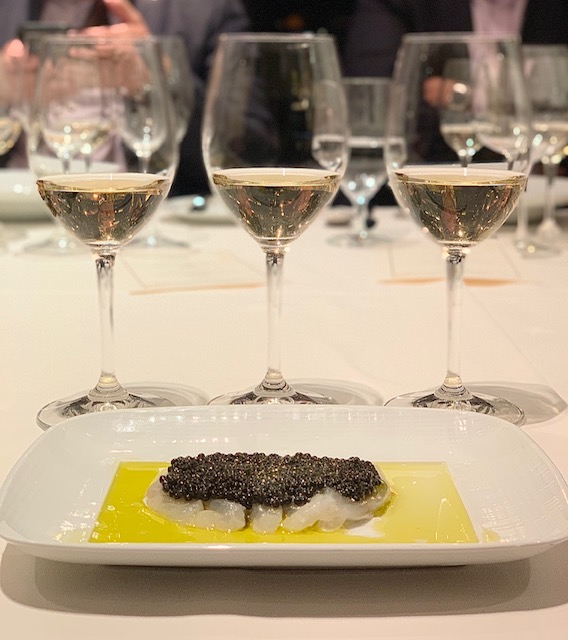
Chasselas is the most widely planted white grape in the country, so our flight began with the lemony, herbal and high-acid Château d’Auvernier Neuchâtel Blanc 2021. Call me influenced, but it was so crisp and refreshing it was like drinking an Alpine breeze. The second in our white flight was the Sandrine Caloz Petite Arvine, “Les Clives” 2018, a grape grown since 1600 that delivered deeper golden apple. Last, we had the Weingut Donatsch Completer 2018 which was full of waxy yellow melon and white peach. The Completer grape is named after Completorio, the monk’s last evening prayer after which they would drink a final glass of wine for the day. Love it. All were quite good with the fluke crudo and caviar, but the acid in the Chasselas made it really sing.
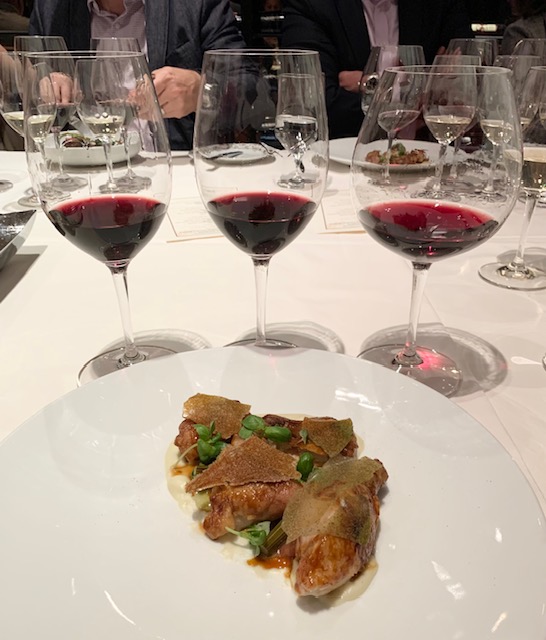
We then moved on to three reds. First, the Weingut Fromm Pinot Noir Village 2018 which is from a high mountain region that produces a lightly earthy style of Pinot Noir. The Jean-René Germanier Syrah Cayas 2019 had a really light body for Syrah with earthy blackberry and a hint of funk. My favorite of the tasting, however, was the Castelto di Cantone UNGULUS Rosso Cabernet Franc Riserva Ticino DOC 2020. This is not your funky light Loire style of Cab Franc. The winemaker vinifies some of the grapes dry (as they do in the process for making Amarone) which concentrates the flavors. The blueberry and black cherry notes were simply scrumptious, and a perfect pair for the rhubarb sauce on the cornish game hen.
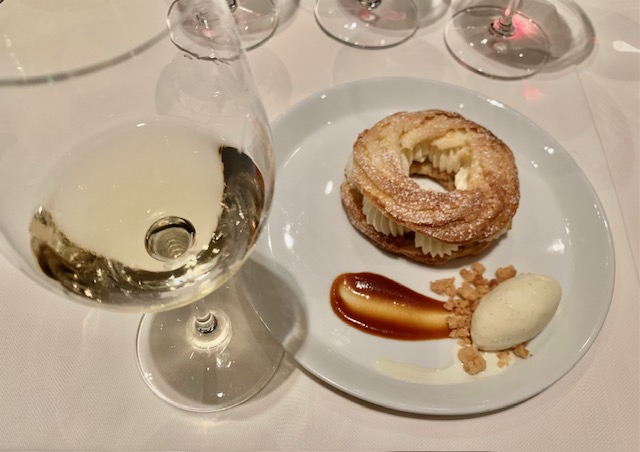
As a final glass (feeling those Swiss monks!) we had a Germanier. There are only 100 acres planted of this grape, and 82 of them are in Switzerland. I always feel so lucky to get to taste these rarer grapes. It was sweeter than the others but still pretty low on the sugar scale with only 15 grams of residual sugar.
Looking forward to finding and trying more Swiss wines, next time preferably high on an Alpine mountain top.
Want to be the first to get the monthly newsletter recommendations? Woo hoo, sign up here!


