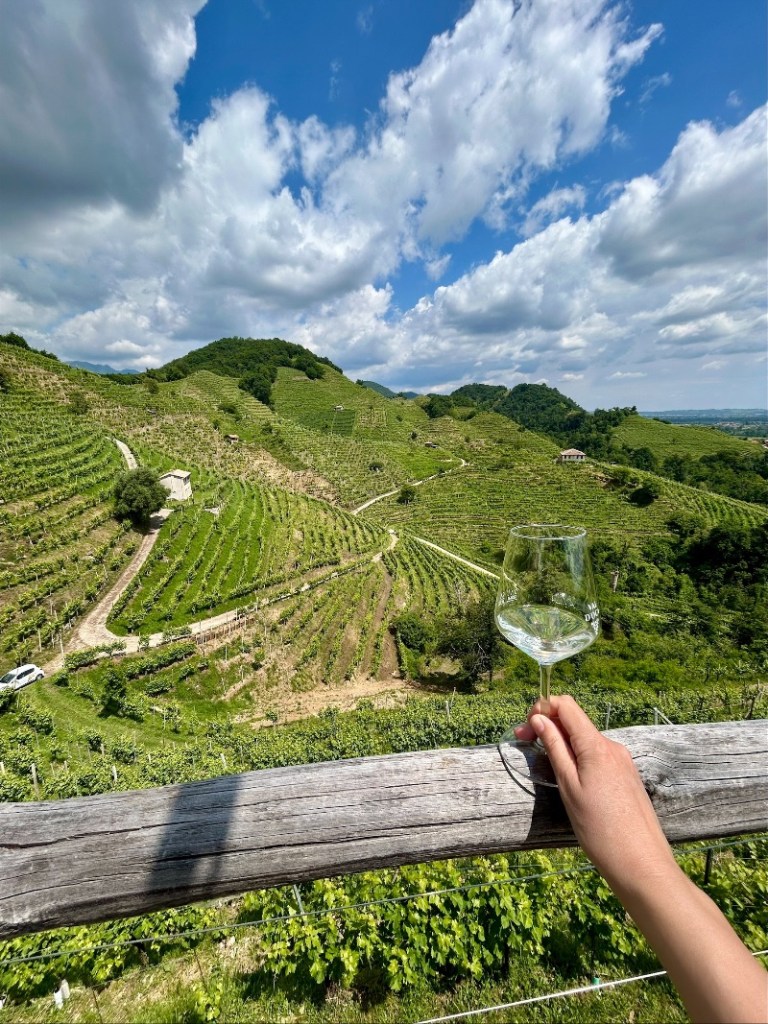
Most people think of party wines and spritzes when they think of Prosecco. But Prosecco took on a different hue on a recent trip to explore Conegliano Valdobbiadene Prosecco Superiore DOCG wines, which make up about 20% of all Prosecco production and have stricter production rules. It’s a mouthful to say, but rather than lots of Italian syllables lets fill our mouths with their good bubbles. Here are a few things that struck me the most about the area and the wines:
It’s a (really) unique area
In 2019, the area was named a UNESCO site for its interaction between man and nature. Farmers shaped the ciglioni – small plots of vines on narrow, steep terraces – into stunning “chequerboard” patterns. Before heading into the wineries on our trip, we’d often be taking panorama videos of the beautiful steep hills that were absolutely packed with Glera vines.
The area has a distinct climate where cold winds are stopped by the pre-Alps, letting the grapes ripen better. About 12 years ago they marked the area by 43 rive (“steep slopes”) of different soils and microclimates. Cartizze is a very small subzone of 105 hectares, which some say is the best part of the area but that’s of course subject to your palette.
And the winemaking has exploded. In 1970 there were about 1500 hectares of grape vines planted in Conegliano Valdobbiadene Prosecco Superiore DOCG, but there are now 9000 hectares and no more vineyards are allowed to be planted.
And a unique method
Here’s where Prosecco differs from other sparkling wines like Champagne. A specific winemaking method was invented by Martinotti (though the Charmat guy takes credit and it now bears his name). Glera grapes are made into still wine but instead of then being put into separate bottles to start the second fermentation and create bubbles (as Champagne does), it’s put into large pressurized vats called autoclaves. The autoclaves allow for the pressure and temperature to be adjusted, so the whole method is very technology-oriented.
They also let the still wine sit in the autoclaves until they need to bottle it based on demand, and they wind up bottling about once a month. Very different from most wineries who bottle after any aging and let wine sit in the bottles until shipped out.
Way more restrained flavor
These weren’t peach bombs like many Proseccos. Instead, they were much more thoughtful and calm, with lots of green apple skin, white florals, and lime pith notes. We had so many excellent meals and the DOCG wines are so much better for pairing with food.
Lower alcohol
This isn’t unique to Conegliano Valdobbaidene Prosecco Superiore DOCG, but really worth a mention here. With hotter temps making many wines have much higher alcohol levels, it’s fantastic to find wines that are still around 12-12.5% alcohol. Some we had were even 11%. Love a wine you can drink more of!
Still not super expensive
Most range from $15 to $25, an amazingly affordable price point for these refreshing and lovely sparklers. Even wines from the subzone of Cartizze, which has some of the most expensive vineyards in the world due to its small size, are still usually under $60.
And now let’s get to the great bottles:
- Antica Quercia: These were a highlight of the trip. They’re very interested in producing Glera in ways that it can age. And Their best seller Matiu leaves some organic material in the wine during second fermentation so it can live longer. We had the 2022 which was had light and fresh florals, green melon and lemon. The winemaker said he’s trying to “give Glera dignity.”
- Perlage – Col di Manza: Biodynamic grapes produce a white peach and an almost salty note, and the bottle is closed with wicker and cloth to show its artisanality.
- Adami – Col Fondo: “Col Fondo” is how they made Prosecco in the past — on the lees and unfiltered. It produces bread dough notes like in this one, with a mild creaminess and a slightly foggy appearance.
- Col Vetoraz – Superiore di Cartizze: This comes from the higher part of the Cartizze zone. Really fresh like a lemon wipe with lots of minerality. We had this with local melt in your mouth sopressa which was an amazing pairing.
- Col Sandago – Vigna del Cuc was a classic brut with lemon, white florals and green apple skin. Delicate bubbles compared to a lot of prosecco.
- Collalto: They drove us around their vast vineyards in an old Jeep since they have the most land in the area and use it to experiment with many grapes beyond Glera. I really liked the Isabella, a blend of 85% Glera but also 15% Verdiso (gives even more freshness and acidity than Glera) and Bianchetta (used for its flavor), all coming together to produce a wine with lots of thyme, lemon peel, and green melon. And the Ottaviano from Rive di Collalto – brut with creamy yellow apple and a hint of saline.
- Montesel is a small family winery with 10 hectares of land. We had the “Vigna del Paradiso” from Rive di Colfosco which was lemony and light, with notes of white florals and honeydew.
- Canevel – Setàge (which comes from “seta” which means silk) was all elegant white florals.
Want to be the first to get the monthly newsletter recommendations? Woo hoo, sign up here!


