I recently went to Sicily, not to follow the White Lotus life but to explore the wines of Etna, whose official DOC was formed in 1968. All the vineyards are situated in a half-ring at the foot of the volcano, whose eruptions have completely shaped the land and infused the soils, grapes, and wines with a bold, ashy minerality. I spent time visiting wineries in the four different slopes to the north, east, southeast and southwest of Etna, which have 20 distinct territories among them. Here are some of the more interesting takeaways and wines from this area shaped by the volcano that “likes to dance” as one winemaker said, and create both menace and great wine!
two main grapes, with supporting floral players
Almost all Etna wines are Carricante for the Etna Bianco and Nerello Mascalese for the Etna Rosso. Catarrotto (for Bianco) and Nerello Cappuccio (for Rosso) are used minimally to add some floral notes, but are usually not made as single varietals. Theresa Eccher’s Alizée was an elegant example of Etna Bianco, with layers of white florals and deep yellow apple.
However, at Azienda Modica, the winemakers said they were also starting to experiment with planting old varietals like the semi-aromatic, less acidic white grape Grecanico, which had been ripped out in the past.

volcano energy creates a strong identity
I’m 75% Sicilian, and someone at one of our dinners said people from Sicily have passionate “volcano energy.” Love. It. This can also be said for Etna’s wines. Every time Etna erupts, it spews out different minerals and volcanic rocks. Over time, wind, rain, and microorganisms turn the rocks into mineral-rich soil. A “contrada” is an area that now has unique characteristics from all of these eruptions, and Etna has 133 of these.
Many wines from all over the world have minerality, but the ones form Etna take it to a new level with tons of volcanic ash in the notes. Drinking “A Muntagna” (the mountain in Sicilian dialect) can be like wearing a leather jacket on a motorcycle, muscular but without punching you out. They generally don’t use a lot of new oak to age their wines which wouldn’t go with the lean, minerally characteristics the soil produces in the grapes.


bringing back the true vineyard
Many of the vineyards I visited were trying to restore a sense of the holistic ecological system, with walnut, almond, and pear trees growing next to the vines. At Feudo Cavaliere, an old abbey with lots of peaceful surrounding land, we ate pears off of the trees and went for a long walk in their woods. Owner and winemaker Margherita Platania wants visitors to have a sensory experience walking through woods, connecting with nature and the sound of the leaves crunching.
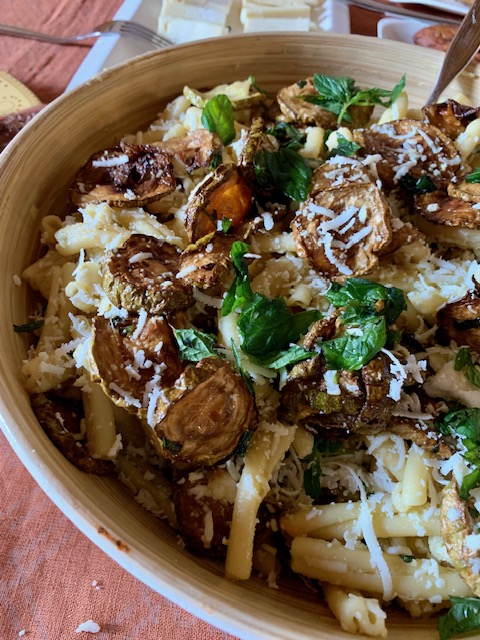
That sensory experience obviously extends to eating and drinking, and Margherita cooked us the best Sicilian lunch ever, with some dishes that I’ve only had ever made for me by my Sicilian family. Caponata with fried eggplant and fresh pignoli nuts, and the pasta with zucchini and fresh mint were “ottimo” as they say!
We washed it all down with their Millemetri Etna Bianco 2016, packed with zesty lemon and still so fresh for an 8-year-old Etna Bianco!


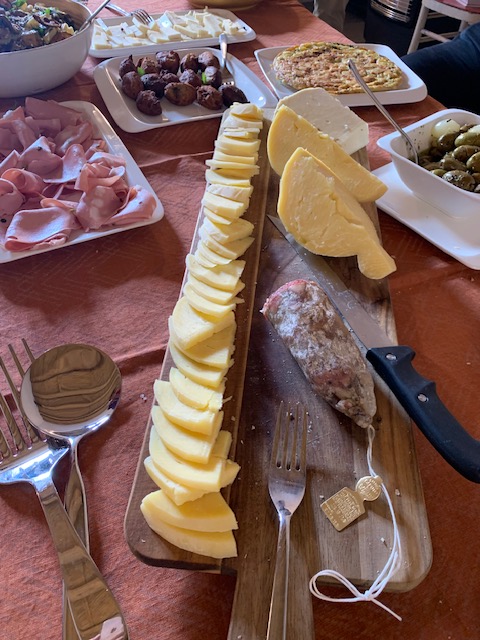
Another ecologically diverse vineyard was Azienda Modica, where we found all sorts of herbs sprouting next to vines. They put one of these, herba di predicatore, in a frittata which paired perfectly with their wines (as they say, what grows together goes together). The Azienda Modica Sciara Nuova 2021 was one of my favorite wines of the trip, with herbal, spicy black cherry cola. It was one of those elegant reds I’d been looking for to prove Nerello Mascalese doesn’t have to be so grippy.


young people are returning to their roots
Young people used to leave this area because of the lack of jobs. As we drove to different vineyards, we saw a bunch of abandoned towns and villas. But now that Etna is becoming more of a tourist destination, younger people are coming back to cultivate abandoned soils and some are even resuscitating abandoned grape varietals. Now, 20% of Etna winemakers are under 42 years old, which is double what it had been recently.
At Tenute dei Ciclopi, three friends who were born in Sicily but left to study and work are now making wines there to bring out the fieriness of the volcano and the salt of the sea.
The Ciclopi Etna Bianco Superiore 2022 was 100% Carricante and spent one year in barrel. A Superiore can only come from the territory of Milo whose proximity to the sea gives it more acidity and salinity, and only about 25-30 wineries make a Superiore. This one had ripe lemon flesh, raw almonds, and a note of salinity. Only 700 bottles are made!
The red Ciclopi Contrada Feudo di Mezzo 2021 was super interesting, with notes of iron, blood, dark minerals, and black cherry, yet a hint of violet to lift out of the darkness. It was great with black tapenade crostini.
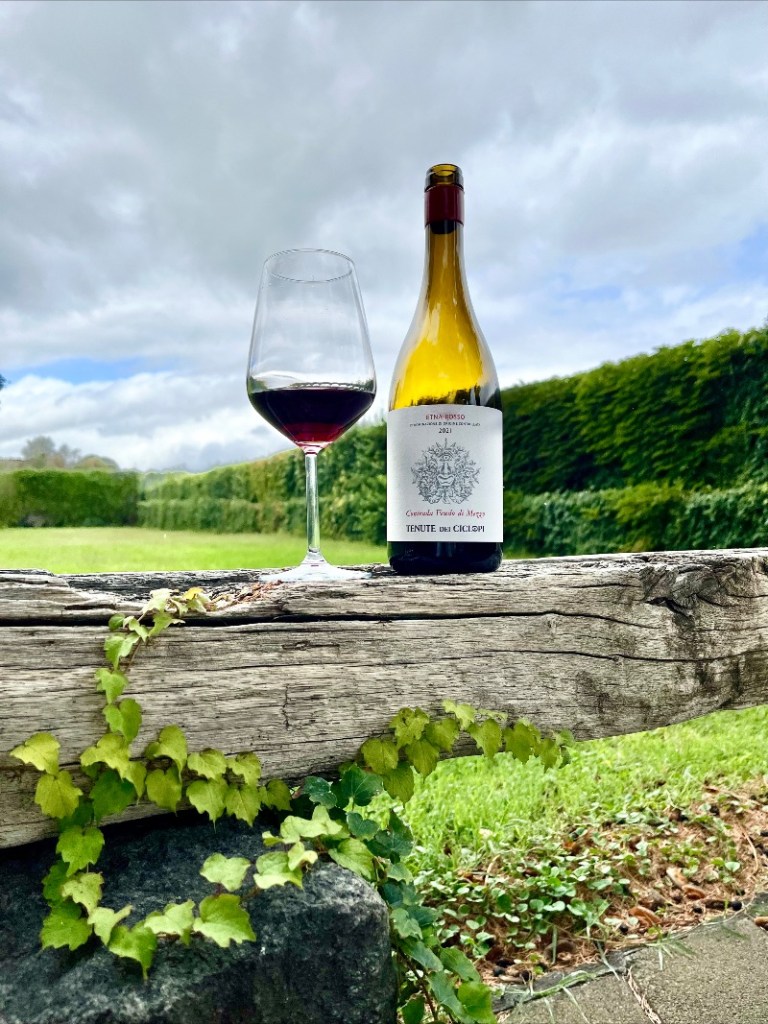
So skip the White Lotus tourist trip, and head to the land of Etna wines! Or, just check them out at home.
Want to be the first to get the monthly newsletter recommendations? Woo hoo, sign up here!


